Travel Notes of A Geechee Girl
SYNOPSIS!
Grosvenor’s story will come to life through her own unique storytelling style, as well as the voices of those who know her and those who have been influenced and informed by her work. Her culinary recipes for both food and living will punctuate this narrative, in conjunction with images and sounds from the various locales she experienced throughout her life.
Written and Directed by acclaimed filmmaker Julie Dash, Travel Notes of a Geechee Girl, chronicles the life and work of Vertamae Smart-Grosvenor, whose unconventional life-journeys and multifaceted career locates her at the heart of five twentieth century movements—the Beat Literary Arts Movement, the Black Power/Black Arts Movement, New Black Cinema, and Food as Cultural Memory. Writer, culinary anthropologist, actor, griot, broadcast journalist, grandmother, and citizen of the world —there is no singular definition for this Gullah-Geechee woman who was described by The Lowcountry Weekly as an “infinitely creative, cosmopolitan woman with the soul of a poet and the fortitude of a soldier.”
The Film
Migration Narratives
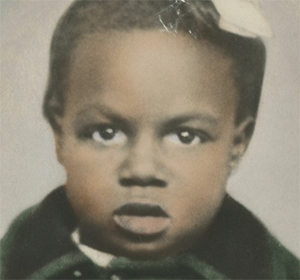
“We descendants of Africans enslaved in the Lowcountry have intrigued scholars and anthropologists for more than a century. They call us Gullah, but we call we-self Geechees…” – Vertamae Smart, Hampton County, SC, circa 1939
The Beat Generation
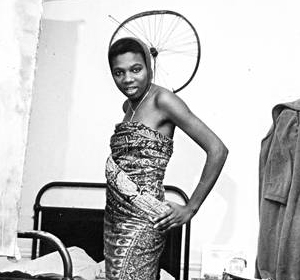
“If you can’t be free, be a mystery” – Riva Dove
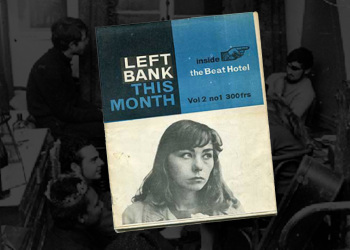
In Paris, Vertamae changes her name to Kali, “The Black One”, in honor of the Hindu Goddess who represents her newfound sense of empowerment. At the Beat Hotel she finds a colony of expat artists and writers — including the Scottish folk singer Alex Campbell, the French painter Lucien Fleury, and American writers Jonathan Kozol, Herbert Kohl, William Burroughs, and Allen Ginsberg. She will also meet and marry sculptor Robert Grosvenor. Verta Kali Smart begins to write articles about life at the Beat Hotel for the Left Bank This Month, a short-lived publication she produces for American visiting Paris.
BLACK POWER/BAM
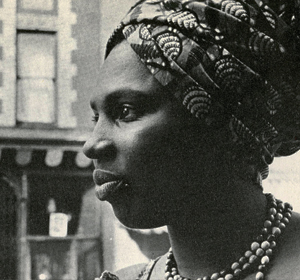
Bob and Vertamae Grosvenor return to the United States and settle in New York, where Smart-Grosvenor finds herself in the center of two American cultural movements. She also bears two children, hosts parties for artists, intellectuals, and SNCC, the Student Non-Violent Coordinating Committee; she pursues her goal of actng, and gets divorced. By 1963, Grosvenor embarks on a new journey that takes her across the country and the ocean once again, as a costume designer and sun-goddess for Sun-Ra’s mystical Arkestra.
Black Cinema Movement
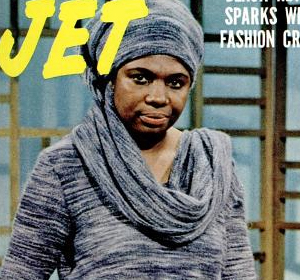
Vertamae Smart Grosvenor, this renaissance child of the Lowcountry becomes the inspiration for Toni Cade Bambara’s play, “The Johnson Girls”. She works with Calvin Lockhart, Clarence Williams, III, Louis Gossett, Jr., the actor, playwright and film director Bill Gunn who is working on “Ganja and Hess”, and with his protégée Kathleen Collins Prettyman who is working on “Losing Ground”, Sam Waymon, Ishameal Reed’s “Personal Problems”, St. Clair Bourne, and Elis Hazlip on “Black Journal” and “Soul”; Julie Dash’s “Daughters of the Dust”, and Oprah Winfrey on “Beloved”.
FOOD AS CULTURAL MEMORY
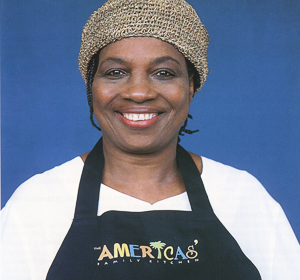
“Tell me what you eat, and I will tell you who you are.” — Jean Anthelme Brillat-Savarin, 1800s “I was a grown girl and across the ocean before I, as folklorist Zora Neale Hurston has described it, looked at home through the spyglass of anthropology and began my exploration of Afro-Atlantic food ways.” — Vertamae Smart-Grosvenor, 1996
The Legacy of Vertamae
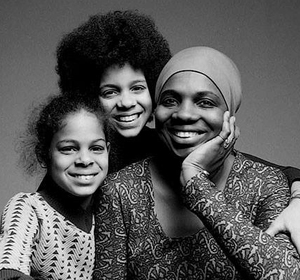
In 1998, Dr. Vertamae Smart Grosvenor received an Honorary doctorate (“Doctor of Humane Letters”) from the University of New Hampshire. Books: Vibration Cooking: The Travel Notes of a Geechee Girl. Ballantine Books, 1970. Thursdays and Every Other Sunday Off: A Domestic Rap, New York: Doubleday, 1972 Black Atlantic Cooking, Prentice Hall Trade, 1990. Vertamae Cooks in America’s Family Kitchen. KQED Books, 1996. Vertamae Cooks Again. Bay Books, 1999. Awards: Robert F. Kennedy Award for Daufuskie: Never Enough Too Soon (1990) Ohio State Award for Daufuskie: Never Enough Too Soon (1990) DuPont-Columbia Award for AIDS and Black America: Breaking the Silence (1990) National Association of Black Journalists Award for her NPR piece South Africa and the African-American Experience (1990) CEBA Award for Marcus Garvey: 20th Century Pan-Africanist (1991) James Beard Award for Best Radio Show for Seasonings on NPR (1996) Craig Claiborne Lifetime Achievement Award from the Southern Foodways Alliance (2013)
Gullah Geechee Culture
Who are the Gullah Geechee people?
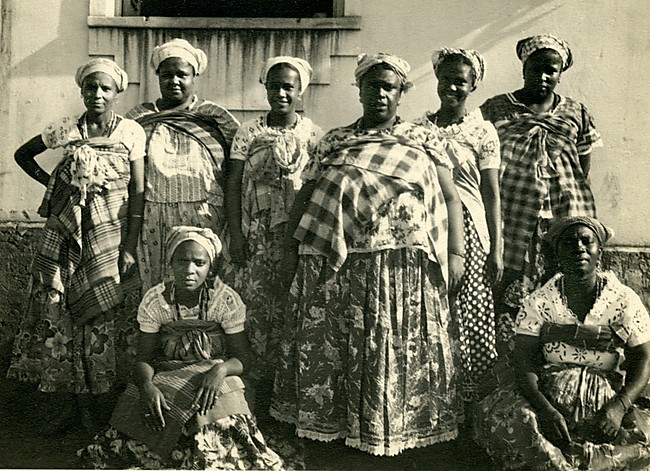 The Gullah Geechee people are descendants of enslaved Africans from various ethnic groups of west and central Africa. Brought to the New World and forced to work on the plantations of coastal South Carolina, Georgia, North Carolina and Florida, Gullah Geechee people have retained many aspects of their African heritage due to the geographic barriers of the coastal landscape and the strong sense of place and family of Gullah Geechee community members. Today, the cultural and linguistic umbrella of the Gullah/Geechee Cultural Heritage Corridor extends from Wilmington, NC to St. Augustine, FL. People who identify as Gullah or Geechee represent the many ways that Africans in the Americas have held on to and amalgamated the traditions of Africa with the cultures they encountered both during and after enslavement. – National Park Service
Geechee Girl
 She’s often described as a mermaid-like figure, with a woman’s upper body and the hindquarters of a fish – like the Mermaid popular in European folklore. She’s Mami Wata, or among the pantheon of water spirits in Africa and it’s Diasporas, our Geechee Girl is simply the Mother of all Orishas, Yemoja.
Transmedia Components

Staff and Crew
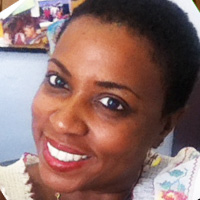
Patricia Lessane, PhD
Executive ProducerPatricia Lessane is the Executive Director of The College of Charleston’s Avery Research Center for African American History and Culture, a post she has held since 2010. She is an affiliate faculty member in Sociology and Anthropology, Women’s and Gender Studies, and African American Studies. Lessane began her teaching career at Chicago State University in the English department in 1996. She earned her doctorate in Cultural Anthropology in 2005. She was a faculty member at Roosevelt University from 2008-2010. She is co-editing, We Hold These Memories Inside of We: Examining Daughters of the Dust and the Black Arts Aesthetic of Julie Dash, currently under review by University of South Carolina Press.
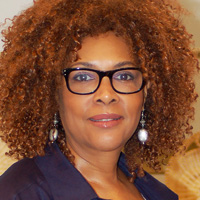
Julie Dash
Director/ProducerTwenty-four years ago, filmmaker Julie Dash broke through racial and gender boundaries with her Sundance award-winning Daughters of the Dust (Best Cinematography), and she became the first African American woman to have a wide and general release of her first feature film. In 2004, The Library of Congress placed Daughters of the Dust in the National Film Registry, it joins a select group of American films being preserved and protected as national treasures. Dash has since written and directed for movies for CBS, BET, ENCORE STARZ, SHOWTIME and HBO. Her work as a Film Director includes music videos, industrials, documentary, and PSA’s. Dash’s work includes Theme Park and Museum Design for Disney’s Imagineering, and The National Underground Railroad Freedom Center’s Brothers of the Borderland, a film she directed for its environmental theater. Her film work has also been featured in retrospectives across the globe; and in 2013 she held the Bob Allison (Allesee) Endowed Chair in Media at Wayne State University. Her most recent film retrospectives include the Scribe Center in Philadelphia, Femme des Films in Paris, Women Make Waves in Taiwan, the L.A. Rebellion Retrospective, organized by the UCLA Film and Television Archives, which has toured North America in 2012-13; and the 2013, First Women’s International Film Festival in Beijing, China and Hong Kong.
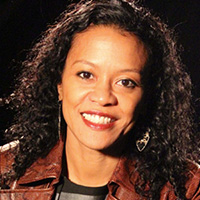
Rachel Watanabe–Batton
Produced ByRachel Watanabe-Batton has over fifteen years of media and entertainment experience working across various platforms, including film, television, new media, commercials and music videos. Watanabe-Batton began her career in feature film development at Warner Brothers, working for Australian director Peter Weir on the film Fearless. She has produced short films including, The Killers and Bajodel Perro, and has been an associate producer on independent features including Ripe and The Book of Love. Watanabe-Battan also worked on Democracy in South Africa, a feature documentary about Nelson Mandela, and produced the documentary Cutting Edge for HBO, as well as Insider Trading With Gabrielle Reece. Watanabe-Batton excels in project management skills, including budgeting, contract negotiation, creative collaboration, celebrity partnerships, and international productions. She is Vice Chair of the Producers Guild of America East (PGA), and Chair of PGA’s Diversity Committee.
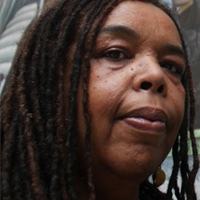
Juanita Anderson
ProducerJuanita Anderson is a veteran producer and documentary filmmaker whose work has centered on the African American experience, the arts, and social issues that give voice to diverse perspectives in the Americas. As an executive producer, Anderson has launched more than twenty-five station and independent projects into the national PBS schedule and has guided the work of nearly forty independent producers across the nation. In addition to seven regional Emmys for her work in local public television, Anderson’s work has garnered numerous national awards including the prestigious George Foster Peabody Award and a DuPont Columbia Silver Baton for excellence in broadcast journalism. Her exhibition credits include producer/director of 18th and Vine a People’s Journey, on permanent exhibition on permanent exhibition at the Horace M. Peterson Visitors Center of the American Jazz Museum in Kansas City, Missouri; and executive producer and segment director of the Favorite Poem Video Anthology, which was originally commissioned for the Bicentennial of the Library of Congress. Anderson is currently the Director of Film and Digital Initiatives for the Department of Communication at Wayne State University and managing producer/fiscal officer for the Michigan Creative Film Alliance.

David Claessen
Director of PhotographyDavid Claessen has shot documentary films for Dutch, French, and British Television, and has worked as a Camera Operator under French Cameramen Henri Alekan and Sacha Vierny. In 1983, Claessen became a Feature Film Director of Photography and has worked on several major feature film projects including Diary of a Mad Black Housewife, Bring It On: Fight to The Finish, Make It Happen, and Back To Nine. He won the Kodak Achievement Award for Best Cinematography for his work on Marc Chiat’s Every Dog Has It’s Day. Claessen also completed several films with Julie Dash, including Brothers of The Borderland, Love Song and The Rosa Parks Story.
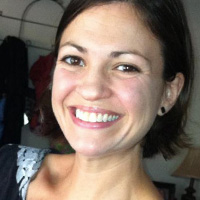
Mary Battle, PhD
Scholarly ConsultantMary Battle is the Public Historian at the Avery Research Center. She received her PhD in Interdisciplinary Liberal Arts from Emory University in 2013. Battle has professional experience museums, including the Smithsonian Institution. Her research interests include African American history and culture in the South Carolina Lowcountry, public history, digital humanities, and oral history.
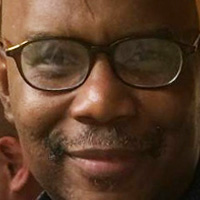
Floyd Webb
Digital Media ConsultantFloyd Webb’s background includes global work in cinema, photojournalism, publishing and advertising. All these experiences contribute to his convergent skills as a producer, multimedia specialist,designer and consultant for the Internet.
His past work includes; producer for Paris-based Effervescence Production’s Future Mag series for France Arté; consultant for the THE MARCH, director John Akomfrah’s 50 Anniversary March on Washington produced by Robert Redford, March 2013; local producer of the American Masters film, The World of Nat King Cole (2006); associate producer of the award-winning Julie Dash Film, Daughters of the Dust (US 1992); 3D animation producer for Amen Ra Studios; writer/director/producer of music videos, short documentaries, and animations projects.